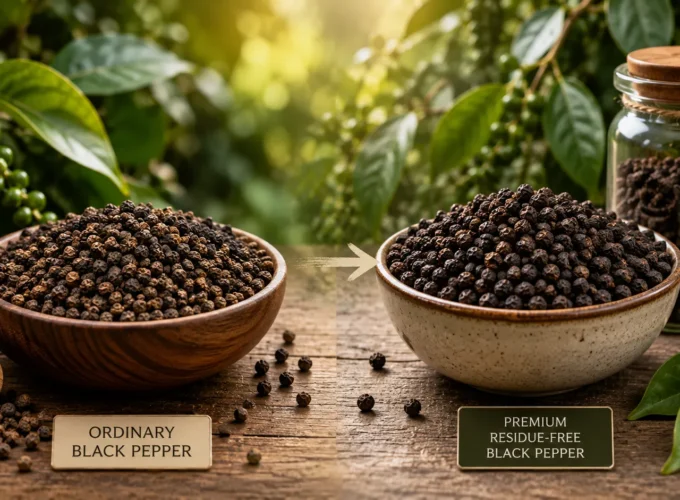

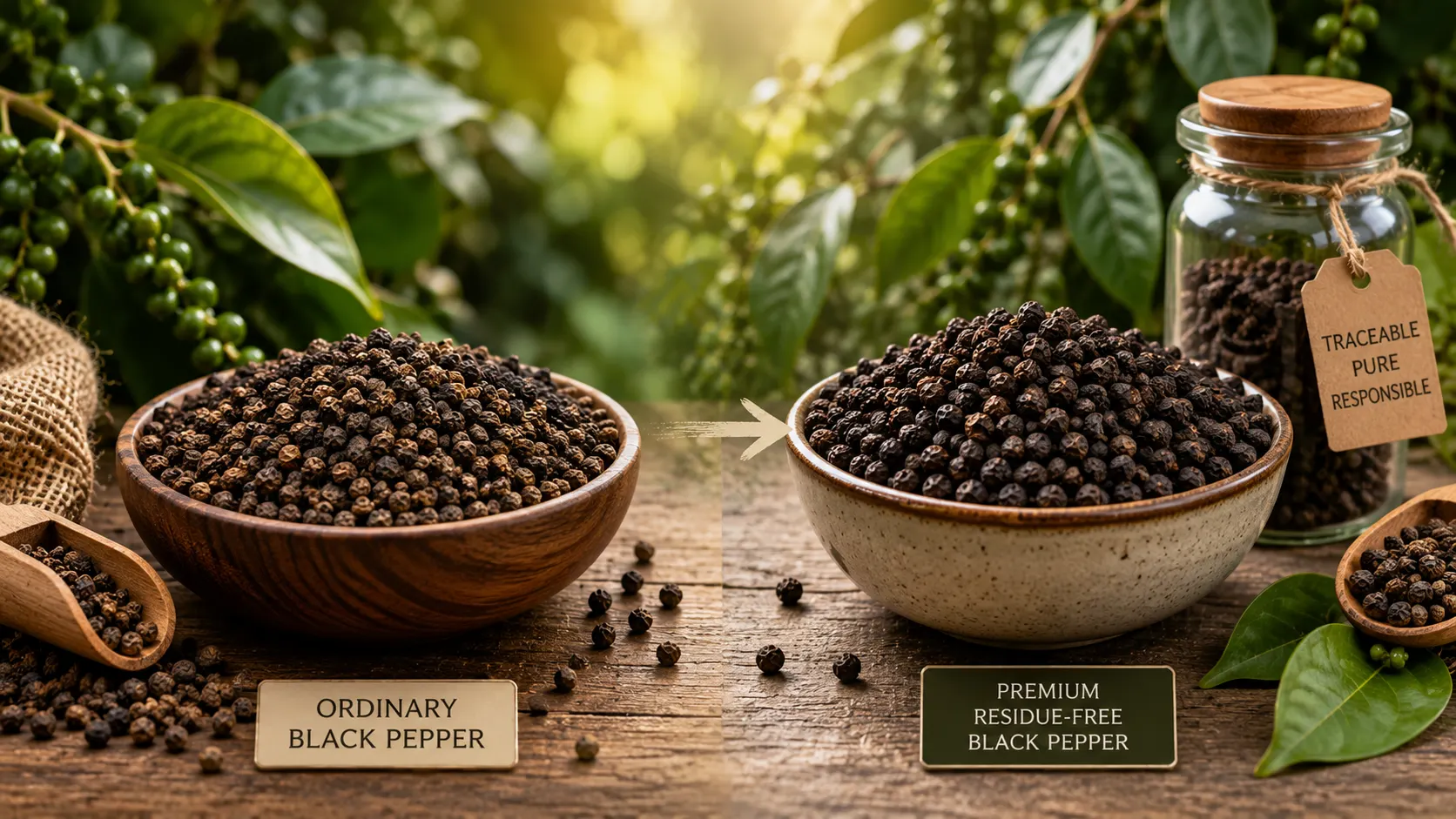
Black pepper may look like a simple kitchen spice, but its quality can vary significantly. Premium residue-free black pepper differs from ordinary black pepper through better sourcing, residue management, cleaning, drying, storage, testing, and quality control.
For everyday consumers, this means the difference is not just about how black pepper looks. It is also about how carefully it is grown, handled, processed, tested, and packed.
What Is Premium Black Pepper?
Premium black pepper is carefully selected and processed to maintain good aroma, flavour, cleanliness, and consistency.
Black pepper comes from the dried berries of the Piper nigrum plant. Its final quality can be influenced by several stages, including cultivation, harvesting, drying, cleaning, grading, storage, and packaging.
A premium approach focuses on controlling these stages instead of treating quality as something that can be checked only after processing.
This can include:
- Responsible sourcing
- Careful harvesting
- Proper drying
- Cleaning and sorting
- Moisture control
- Residue management
- Quality testing
- Hygienic storage
- Protective packaging
What Does Residue-Free Black Pepper Mean?
Residue-free black pepper generally refers to black pepper produced and handled with practices designed to minimize unwanted pesticide residues.
However, consumers should not rely on the words “residue-free” alone. The more meaningful question is whether the product is supported by appropriate quality controls, testing, and applicable food-safety requirements.
The Spices Board of India provides quality information covering black pepper, including standards, testing parameters, pesticide-residue testing, moisture, mold, foreign matter, and other quality considerations.
This is why responsible brands should focus on measurable quality practices rather than marketing claims alone.
Premium Black Pepper vs Ordinary Black Pepper: What Is the Difference?
The main difference is the level of attention given to the product throughout its supply chain.
Quality Factor | Premium Black Pepper (Residue-Controlled) | Ordinary Black Pepper |
| Sourcing | Carefully selected and monitored | Quality may vary by supplier |
| Residue Management | Strong focus on controlling pesticide residues | Practices can vary |
| Cleaning | Carefully cleaned and sorted | Cleaning standards may vary |
| Moisture Control | Closely monitored | May vary with processing and storage |
| Aroma | Typically fresh and more consistent | Can vary with age and storage |
| Quality Testing | Greater focus on documented testing | Testing practices may vary |
| Traceability | Better visibility of the supply chain | May have less information available |
| Storage | Controlled to protect quality | Conditions may vary |
| Consistency | More consistent between batches | Quality can vary between batches |
The table shows why premium black pepper should be judged by overall quality control, not simply by size, colour, or price.
Why Is Pesticide-Residue Control Important in Black Pepper?
Pesticide residues are an important food-safety consideration for agricultural products.
Farmers may use crop-protection products during cultivation. The important part is responsible use, proper agricultural practices, and monitoring of residues according to applicable requirements.
Spices Board of India lists pesticide residues among the parameters evaluated in spice testing, including different organochlorine and organophosphorus pesticide residues.
For consumers, this means a trustworthy black pepper product should come from a supply chain that takes residue management and quality testing seriously.
Does Drying Affect Black Pepper Quality?
Yes. Proper drying is essential for maintaining black pepper quality.
Black pepper can absorb moisture from its surroundings. Excess moisture can increase the risk of mold and deterioration.
Spices Board guidance notes that dried black pepper should have a moisture content of no more than 13% by weight under the referenced FSSAI specification. It also recommends clean and hygienic drying and storage environments.
Good drying therefore does more than remove water. It helps protect the spice during storage and reduces opportunities for contamination and quality loss.
Why Is Cleaning Important for Premium Black Pepper?
Cleaning and sorting help remove unwanted materials from the spice.
During harvesting, drying, transportation, and storage, spices can come into contact with dust, stones, plant material, insects, or other foreign matter.
Proper processing can reduce these unwanted materials and help maintain product hygiene.
Spices Board guidance specifically emphasizes clean processing areas and precautions against recontamination after pepper has been cleaned and sorted.
This is one reason premium black pepper is not simply about selecting attractive-looking peppercorns. The handling process matters too.
Does Premium Black Pepper Have Better Aroma and Flavour?
It can.
Freshness, variety, origin, harvesting, drying, storage, and processing can all influence the sensory qualities of black pepper.
Good-quality pepper should have its characteristic peppery aroma and flavour. Poor storage or excessive age can affect freshness and overall sensory quality.
For consumers, whole peppercorns that are properly stored can also offer a fresher experience when freshly ground before use.
Is Bigger Black Pepper Always Better?
No. Bigger peppercorns do not automatically mean better-quality pepper.
Size can be one grading factor, but it does not tell you everything about the product.
Quality also depends on:
- Cleanliness
- Moisture
- Freshness
- Aroma
- Processing
- Storage
- Residue control
- Testing
- Traceability
Therefore, consumers should look beyond appearance when choosing premium black pepper.
How Can You Identify High-Quality Black Pepper?
You cannot confirm complete quality simply by looking at peppercorns.
Instead, check the product and brand information for:
- Clear ingredient information
- Reliable sourcing information
- Proper packaging
- Manufacturing and expiry details
- Food-safety information
- Quality-testing information where available
- Transparent brand practices
- Appropriate storage instructions
A trustworthy brand should be able to explain how it approaches sourcing, processing, testing, and quality control.
Why Choose Premium Residue-Controlled Black Pepper?
Black pepper is used regularly in many Indian kitchens. Even though it is normally used in small quantities, choosing a quality-focused product can be part of making more informed food choices.
Premium black pepper is about more than strong flavour or attractive packaging.
It represents attention to the complete journey:
Responsible sourcing → careful cultivation → proper harvesting → controlled drying → cleaning → testing → hygienic storage → quality packaging
This approach helps create greater confidence in the product.
For AgrEco Pure, the focus on premium residue-controlled black pepper can help consumers make a more informed choice when comparing different spice products.
Frequently Asked Questions
What is the difference between premium and ordinary black pepper?
Premium black pepper generally receives greater attention across sourcing, cleaning, drying, residue management, testing, storage, and packaging. Ordinary black pepper can vary in quality depending on its source and processing.
Is residue-free black pepper completely free from pesticides?
The term “residue-free” should be understood carefully. Consumers should look for appropriate testing and compliance information rather than assuming that a label alone proves the complete absence of every possible residue.
Is premium black pepper better than regular black pepper?
Premium black pepper can offer advantages in consistency, cleanliness, freshness, sourcing transparency, and quality control. However, “premium” should be supported by actual quality practices rather than being treated as a guarantee simply because of the name.
How is black pepper tested for quality?
Black pepper can be evaluated for different parameters, including moisture, mold, foreign matter, insect infestation, pesticide residues, heavy metals, and other quality indicators. Spices Board India lists several such testing parameters.
How should black pepper be stored?
Keep black pepper in a clean, dry, airtight container away from moisture, direct sunlight, and excessive heat. Proper storage helps preserve aroma and quality.
Does residue-free black pepper taste different?
Residue control itself does not determine flavour. Taste is influenced by factors such as pepper variety, origin, freshness, harvesting, drying, processing, and storage.
What should I check before buying premium black pepper?
Look for clear product information, reliable sourcing, proper packaging, manufacturing and expiry details, and credible information about quality control and testing.
Final Thoughts
Premium black pepper is different from ordinary black pepper because quality begins long before the spice reaches your kitchen.
Sourcing, responsible cultivation, residue management, proper drying, cleaning, testing, storage, and packaging all contribute to the quality of the final product.
So, when choosing black pepper, do not judge it only by size, colour, price, or packaging.
Look at the process behind the product.
For consumers who want to make more informed food choices, premium residue-controlled black pepper from a quality-focused AgrEco Pure can be a better way to think about everyday spice selection: not just as a purchase, but as a choice based on transparency, quality, and responsible food practices.