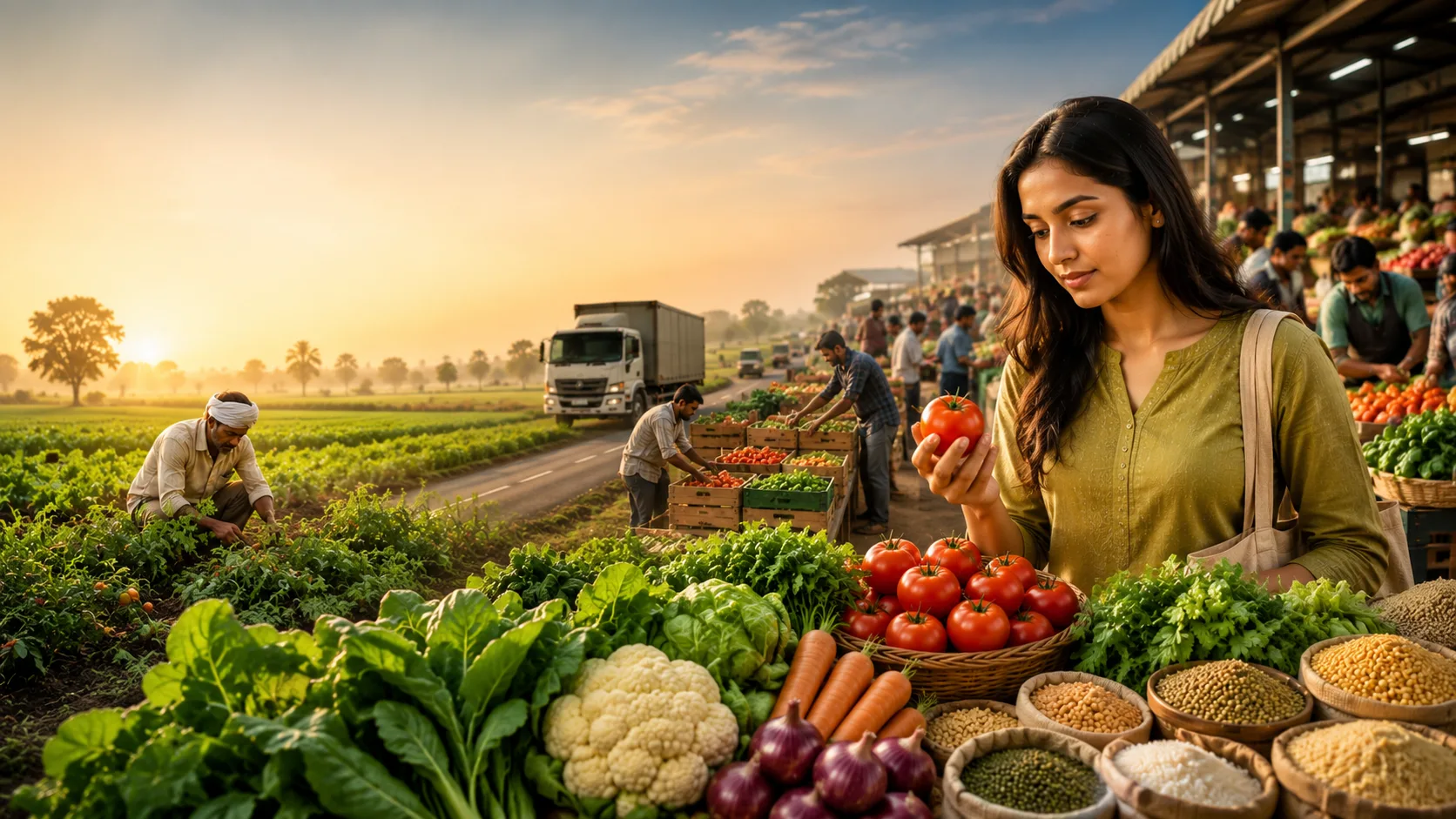
Where does your food come from before it reaches your plate?
For many Indian consumers, the answer may simply be a brand name or the name of a nearby shop. But behind every packet of rice, box of spices, bottle of oil, or pack of snacks is a much bigger journey.
Food can move from farms and suppliers to processing units, warehouses, distributors, retailers, and finally our homes.
Understanding this journey is important because food origin, traceability, and transparency can help consumers make more informed food choices.
Key Takeaways
- Food goes through several stages before reaching consumers.
- Food traceability helps businesses track products through the supply chain.
- Food transparency gives consumers better information about what they buy.
- Checking labels can help consumers understand important product details.
- Technology such as QR codes can make supply-chain information easier to access.
- Responsible food businesses can build greater trust through transparent sourcing and processes.
What Is Food Traceability?
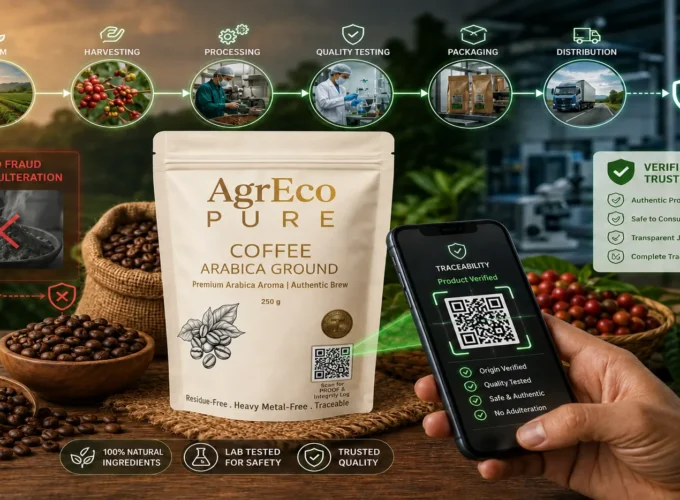
Food traceability is the ability to follow a food product or its ingredients through different stages of the supply chain.
A simple food journey may look like:
Farm → Collection → Processing → Packaging → Storage → Distribution → Retail → Consumer
At each stage, information can be recorded to help identify where a product came from and where it went.
For consumers, this creates greater visibility into the food supply chain. For food businesses, traceability can help with quality management, product tracking, and responding to potential food safety problems.
Why Is Food Traceability Important in India?
India has a large and complex food supply chain. Food products can travel between different states and pass through several businesses before reaching consumers.
That makes traceability especially valuable.
If there is a problem with a particular batch of food, good records can help businesses identify the affected product and trace its movement through the supply chain.
Food safety is also supported by regulatory standards and oversight. The Food Safety and Standards Authority of India (FSSAI) is responsible for regulating and supervising food safety across India.
Why Should Consumers Know Where Their Food Comes From?
Knowing the source of your food gives you more information before you buy it.
It can help you understand:
- Where ingredients may have been sourced
- Who produced or supplied the product
- How the food was processed
- When it was packaged
- How it may have been stored and transported
- What information the manufacturer provides about the product
You do not need to investigate every step of a food product’s journey.
The goal is simply to become a more informed consumer.
What Should You Check on a Food Label?
You can learn a surprising amount about a packaged food product just by reading its label.
1. Ingredients List
The ingredients list tells you what is used to make the product.
Instead of relying only on front-of-pack claims, take a moment to read the ingredients.
2. Date Information
Check the relevant manufacturing, packing, best-before, or expiry information on the package.
This is especially important for products that have a limited shelf life.
3. FSSAI Information
Packaged food products should carry the applicable regulatory information required under India’s food safety and labelling framework.
Checking the available licence or registration information can also help consumers understand the food business responsible for the product.
4. Batch or Lot Number
A batch or lot number can help identify a particular production batch.
This information becomes particularly useful when a specific batch needs to be traced.
5. Storage Instructions
Some foods require specific storage conditions.
Following the instructions on the package can help maintain the product’s quality and safety.
6. Source and Origin Information
Where information about the source or origin is provided, consumers can use it to better understand the product’s journey.
Does Food Traceability Improve Food Safety?
Yes, food traceability can support food safety by making it easier to identify and track products through the supply chain.
Imagine that a food business discovers an issue with one production batch.
Without proper records, finding where that batch went could be difficult.
With effective traceability records, the business can more easily identify the relevant product, suppliers, processing information, and distribution routes.
This can support faster and more targeted action.
FSSAI also maintains regulations covering areas such as food standards, contaminants, packaging and labelling, organic foods, and food recall procedures.
Is Food Transparency the Same as Food Traceability?
No. They are related, but they are not the same.
Traceability focuses on tracking a product through the supply chain.
Transparency focuses more on making relevant information understandable and accessible to consumers and other stakeholders.
For example, a company may have detailed internal records showing where its ingredients came from. Transparency means communicating appropriate information clearly so customers can better understand the product.
Both are important for building trust.
How Can Technology Make Food More Transparent?
Technology is changing how consumers interact with food information.
One simple example is the QR code.
A QR code on food packaging can potentially connect consumers with additional product information, depending on how the business uses it.
Digital systems can also help food businesses record information about sourcing, batches, processing, storage, and distribution.
This can make supply chain information easier to organize and, where appropriate, easier to share.
As consumers become more digitally aware, they may increasingly expect food brands to provide useful information beyond traditional packaging.
Does Knowing the Food Source Mean You Should Buy Only Local Food?
No. Knowing where food comes from does not mean that locally produced food is automatically better or that products from outside your region are inferior.
The more important point is information and transparency.
A food product can travel from another part of India and still be handled through an appropriate supply chain.
Consumers should focus on reliable product information, responsible sourcing, applicable standards, and the credibility of the food business.
How Can Indian Consumers Make Smarter Food Choices?
You do not need to completely change your shopping habits.
Start with these simple steps:
- Read the label before buying.
- Check the ingredients list.
- Look at relevant date information.
- Check batch or lot details where available.
- Follow storage instructions.
- Understand important food claims instead of relying only on advertisements.
- Prefer brands that communicate product information clearly.
- Ask questions when important information is unclear.
- Use official food-safety resources when you need reliable information.
These small habits can make a big difference in how confidently you choose food.
Why Does Food Transparency Matter to Food Businesses?
Food transparency is not only beneficial for consumers.
It can also help food businesses build credibility and stronger customer relationships.
When a brand can clearly communicate information about its products, sourcing, production, and supply chain, consumers have more reasons to trust the business.
For a food brand such as AgrEco Pure, making the journey behind food easier to understand can help create a stronger connection between consumers, producers, and the food they purchase.
However, transparency should always be based on real, verifiable information rather than unsupported marketing claims.
What Is the Future of Food Traceability in India?
The future of food traceability is likely to become increasingly digital.
As technology improves, food businesses can use digital records, batch tracking, QR codes, supply-chain platforms, and other tools to manage product information more efficiently.
For consumers, this could mean easier access to information about the food they buy.
The bigger change, however, is likely to be consumer expectations.
People increasingly want to know not only what they are buying, but also where it came from and how it reached them.
Frequently Asked Questions
What is food traceability?
Food traceability is the process of tracking a food product or its ingredients through different stages of the supply chain, from sourcing and production to distribution and sale.
Why is food traceability important?
Food traceability helps businesses track products, manage supply-chain information, and identify specific products or batches when a problem needs to be investigated.
How can consumers check where their food comes from?
Consumers can start by reading product labels, checking manufacturer information, batch details, ingredient lists, applicable certifications, and sourcing information provided by the brand.
What is food transparency?
Food transparency means providing consumers and other stakeholders with clear and understandable information about a food product and its supply chain.
What should I check before buying packaged food?
Check the ingredients, relevant date information, manufacturer details, batch or lot information, storage instructions, and applicable food-safety information.
Does food traceability guarantee that food is safe?
No. Traceability is an important supply-chain tool, but it does not by itself guarantee food safety. Food safety also depends on proper production, handling, processing, storage, transportation, testing, and compliance with applicable requirements.
How can technology help food traceability?
Digital records, QR codes, databases, and supply-chain management systems can help businesses record, organise, track, and potentially share information about food products.
Final Thoughts
Every food product has a journey.
Before it reaches your kitchen, it may pass through farms, suppliers, processors, warehouses, distributors, and retailers. Understanding that journey can make you a more informed consumer.
Knowing where your food comes from is not about questioning every product. It is about having better information before making a choice.
For Indian consumers, simple habits such as reading labels, checking product information, understanding food-safety requirements, and choosing transparent brands can help create greater awareness.
For food businesses, better traceability and transparency can strengthen accountability and consumer trust.
At AgrEco Pure, the idea is simple: when consumers understand more about their food, they can make more confident choices about what reaches their table.