Verifying where your food comes from helps you choose safer, fresher, and more responsibly sourced products. Before buying, check the country of origin, read food labels, look for certifications, scan QR codes, and purchase from trusted suppliers. These simple steps help you make informed decisions while supporting a transparent and sustainable food supply chain.
Why Should You Verify Where Your Food Comes From?
Consumers today care about more than price and appearance. They want to know how their food was grown, handled, and transported before it reaches their table. Verifying food origin helps you make healthier purchasing decisions while encouraging transparency throughout the agricultural supply chain.
Knowing where your food comes from can also reduce the risk of buying mislabeled or low-quality products. Whether you’re purchasing fruits, vegetables, grains, spices, or packaged foods, understanding their origin gives you greater confidence in every purchase.
At AgrEco PURE, we believe informed consumers play an important role in building a safer and more sustainable food system by choosing products from trusted and responsible sources.
What Is Food Traceability?
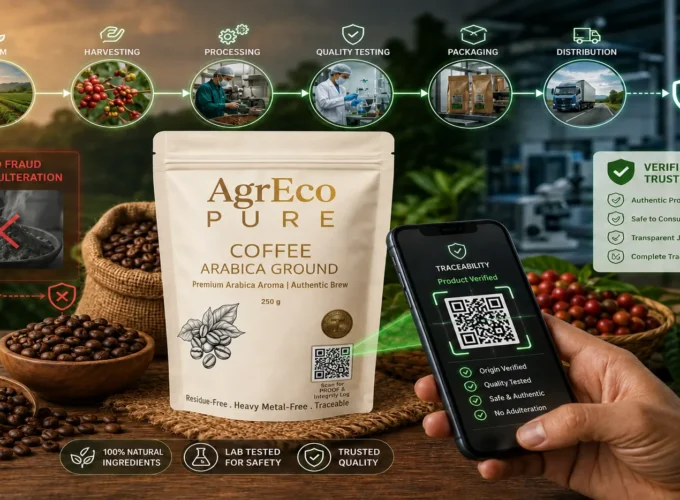
Food traceability is the process of tracking a food product throughout its journey—from the farm where it is grown to the retailer where it is sold. According to the FDA’s guidance on food tracking and tracing, improved traceability helps identify products more quickly during food safety investigations and recalls while increasing transparency across the food supply chain.
Modern traceability systems benefit consumers by improving food safety, reducing counterfeit products, and helping businesses respond faster when issues arise.
How Can You Verify Where Your Food Comes From Before Buying?
1. Check the Country of Origin
Start by reading the packaging carefully. Most food products display where they were grown or produced.
Look for information such as:
- Product of India
- Grown in Australia
- Product of Italy
- Harvested in Vietnam
Keep in mind that “Packed in” doesn’t always mean the food was grown there.
2. Read the Food Label Carefully
A detailed label often reveals valuable information beyond nutrition facts.
Look for:
- Producer or manufacturer name
- Batch number
- Packaging date
- Processing location
- Best-before date
Brands that provide complete information are generally more transparent about their sourcing practices.
3. Look for Trusted Certifications
Certifications indicate that products meet recognized quality or farming standards.
Examples include:
- Organic certification
- Good Agricultural Practices (GAP)
- Food safety certifications
- Sustainable farming certifications
These certifications provide additional confidence when selecting food products.
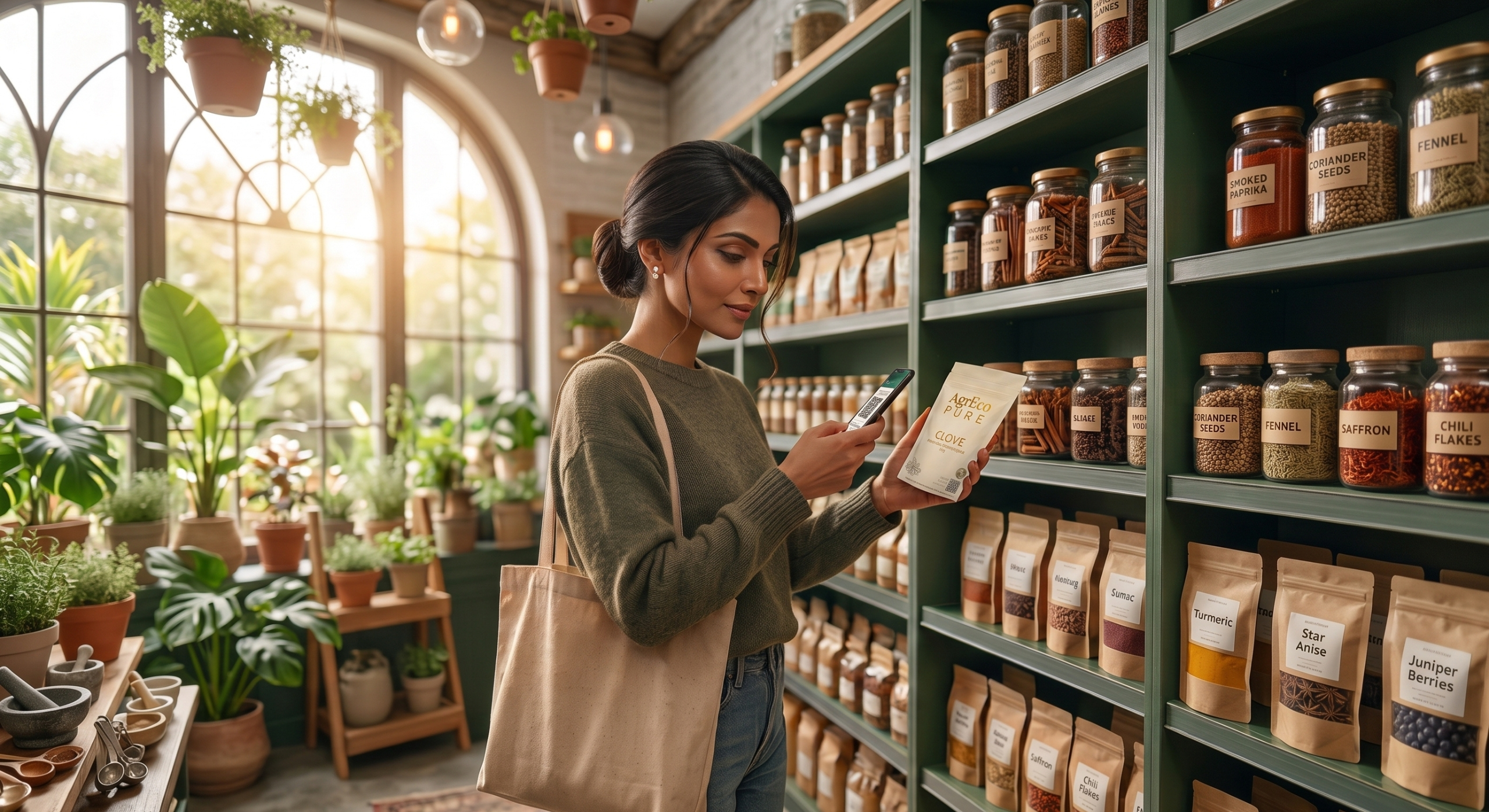
4. Scan QR Codes
Many food manufacturers now include QR codes that provide information about:
- Farm location
- Harvest details
- Product journey
- Producer information
- Quality certifications
This allows consumers to verify product information within seconds.
5. Buy From Trusted Suppliers
Choose businesses that openly share information about their farmers, sourcing practices, and quality standards.
Transparent suppliers are more likely to maintain consistent product quality and responsible agricultural practices.
Food Labels vs. Food Traceability
| Food Labels | Food Traceability |
| Shows basic product information | Tracks the complete product journey |
| Includes country of origin | Includes farm, processing, and transportation records |
| Helps identify the product | Helps verify authenticity and safety |
| Useful for everyday shopping | Supports food safety investigations and recalls |
Using both food labels and traceability information gives consumers greater confidence before making a purchase.
Quick Checklist Before Buying Food
Before adding a product to your cart, ask yourself:
- Is the country of origin clearly mentioned?
- Does the packaging identify the producer?
- Are trusted certifications displayed?
- Can the product be traced using a QR code?
- Does the supplier provide transparent sourcing information?
If the answer is “yes” to most of these questions, you’re more likely to be purchasing a reliable product.
Common Myths About Food Origin
Myth: Expensive food always has better traceability.
Fact: Price doesn’t guarantee transparency. Always verify the product information.
Myth: Local food doesn’t need verification.
Fact: Even locally produced food should include clear sourcing and producer details.
Myth: Attractive packaging means higher quality.
Fact: Reliable information and traceability are much stronger indicators of product quality than packaging alone.
Key Takeaways
- Check the country of origin before purchasing.
- Read labels for farm or producer information.
- Look for trusted certifications and quality standards.
- Use QR codes to verify product traceability.
- Buy from transparent and reliable suppliers.
- Support responsible and sustainable farming practices.
Frequently Asked Questions
Why should I verify where my food comes from?
It helps you choose safer, higher-quality products while supporting responsible farming and transparent supply chains.
What is food traceability?
Food traceability is the ability to track a food product from the farm to the consumer through every stage of the supply chain.
Can QR codes verify food origin?
Yes. Many manufacturers use QR codes to provide farm details, harvest information, certifications, and product history.
Are food certifications important?
Yes. Certifications demonstrate that products meet established quality, safety, or sustainability standards.
How does AgrEco PURE support transparent sourcing?
AgrEco PURE promotes responsible sourcing by connecting consumers with trusted agricultural products and encouraging transparency throughout the food supply chain.
Conclusion
Knowing how to verify where your food comes from before you buy it empowers you to make smarter purchasing decisions. By checking labels, certifications, country of origin, and traceability information, you can better understand the journey your food has taken before reaching your table.
As consumers increasingly value food safety and transparency, choosing trusted suppliers becomes more important than ever. At AgrEco PURE, we are committed to supporting responsible agriculture and helping customers make informed choices with confidence. Every purchase backed by transparency contributes to a safer, more sustainable, and trustworthy food ecosystem.