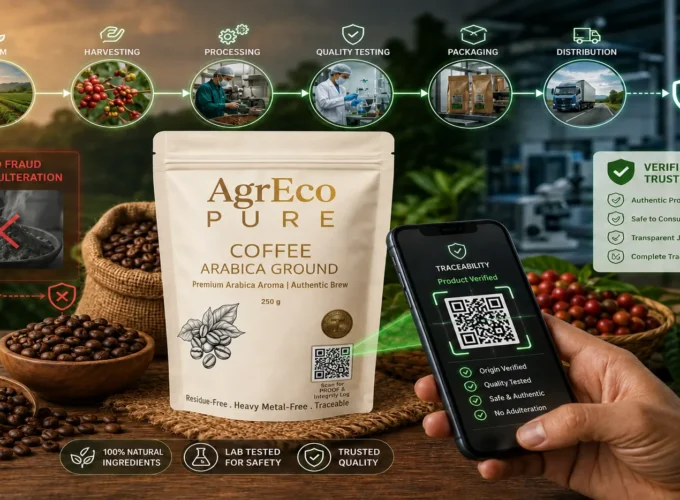
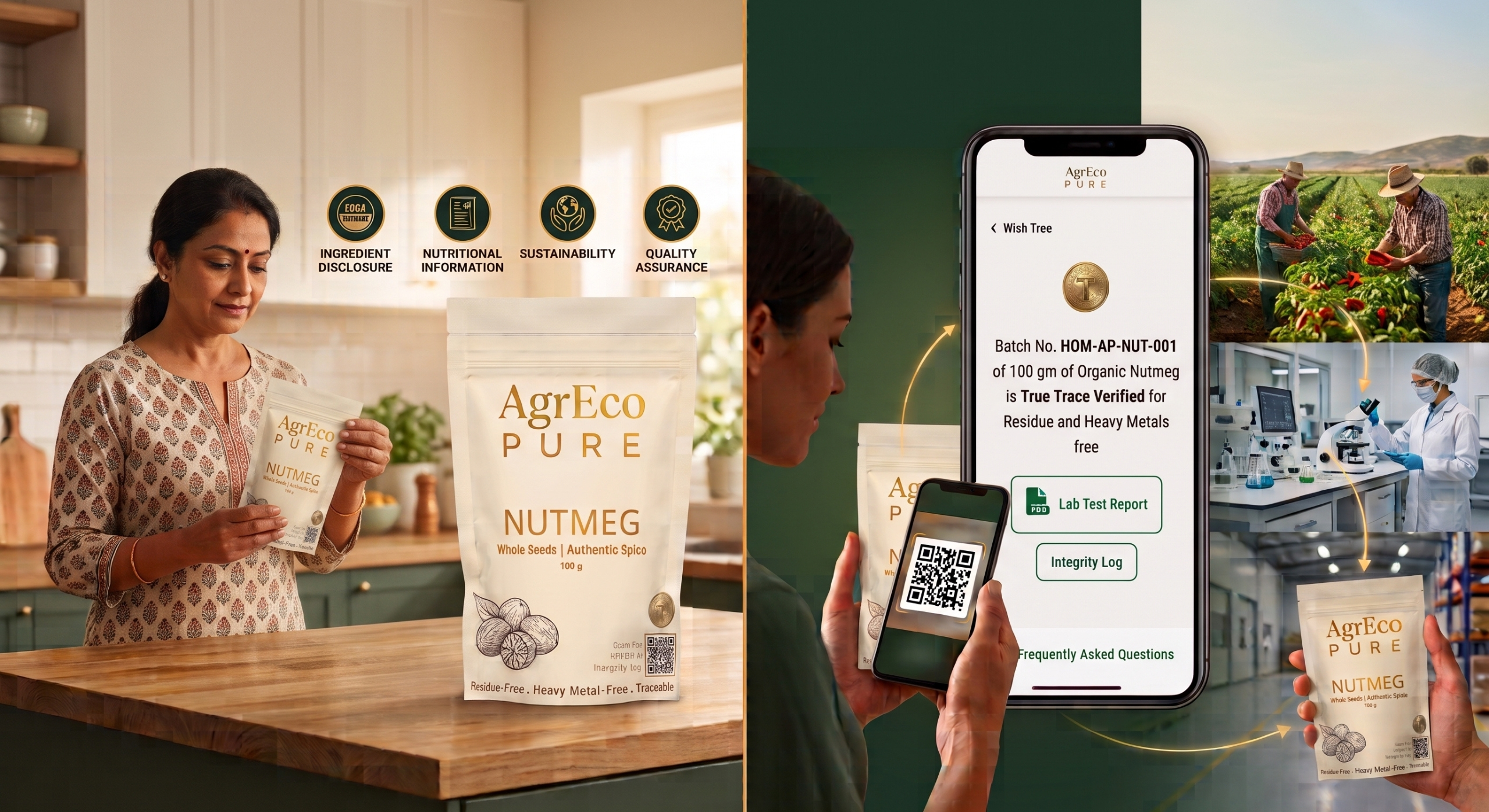
Food traceability is the ability to track a food product through every stage of its journey, from farm to consumer. Food transparency is the practice of openly sharing information about that journey with consumers. In simple terms, traceability collects and verifies data, while transparency communicates it. Together, they help improve food safety, strengthen consumer trust, reduce food fraud, and create a more accountable food supply chain.
As consumers become more conscious about what they eat, businesses are expected to provide more than just quality products. They must also prove where food comes from, how it is produced, and whether it meets safety standards. At AgrEco PURE, we believe that understanding these concepts helps businesses and consumers make informed decisions.
What Is Food Traceability?
Food traceability is a system that records and tracks a food product at every stage of the supply chain. It creates a complete history of the product, allowing businesses to identify where it originated, how it was processed, and where it was distributed.
A food traceability system typically records:
- Farm or production source
- Harvest or manufacturing date
- Processing facility
- Batch or lot number
- Storage conditions
- Transportation details
- Distribution channel
- Retail destination
If a safety issue occurs, businesses can quickly identify affected products and remove them from the market.
Example
Imagine purchasing a packet of rice with a QR code. After scanning it, you can see the farm where it was grown, the harvest date, the processing plant, and transportation details. That is food traceability in action.
What Is Food Transparency?
Food transparency is the willingness of food businesses to openly share information about their products, sourcing practices, production methods, and quality standards.
Transparency focuses on helping consumers understand the story behind their food.
Information commonly shared includes:
- Ingredient sourcing
- Farming practices
- Sustainability efforts
- Quality certifications
- Nutritional information
- Manufacturing standards
- Ethical sourcing commitments
Transparency builds confidence because consumers know exactly what they are purchasing.
Food Traceability vs Food Transparency: Difference
| Feature | Food Traceability | Food Transparency |
| Purpose | Tracks products through the supply chain | Shares product information openly |
| Focus | Data collection and verification | Consumer communication |
| Primary Users | Farmers, manufacturers, regulators | Consumers and stakeholders |
| Supports Product Recalls | Yes | Indirectly |
| Builds Consumer Trust | Yes | Yes |
| Main Question Answered | Where did this product come from? | What do I know about this product? |
The easiest way to remember:
- Traceability tracks.
- Transparency explains.
A company can have excellent traceability without sharing information publicly. Likewise, transparency is only meaningful when it is backed by reliable traceability data.
Why Are Food Traceability and Transparency Important?
Businesses need both because they solve different problems.
Food traceability helps businesses:
- Identify contamination quickly
- Manage product recalls efficiently
- Meet food safety regulations
- Prevent counterfeit products
- Improve inventory management
- Verify supplier performance
Food transparency helps consumers:
- Make informed purchasing decisions
- Understand ingredient origins
- Trust food brands
- Support ethical farming
- Choose sustainable products
When combined, these practices create a safer and more reliable food system.
How Does Food Traceability Work?
Most modern traceability systems follow a simple process.
Step 1: Production
Farmers record crop or livestock information, including location, cultivation practices, and harvest dates.
Step 2: Processing
Manufacturers assign batch numbers and document production details.
Step 3: Distribution
Transportation companies record shipment routes, storage temperatures, and delivery schedules.
Step 4: Retail
Retailers receive and store products while maintaining inventory records.
Step 5: Consumer Access
Many products now include QR codes that allow customers to view traceability information instantly.
This digital record creates accountability across every stage of the supply chain.
Why Is Traceability in the Food Industry Becoming Essential?
The modern food supply chain is far more complex than it was a decade ago. A single product may pass through multiple farms, processors, warehouses, distributors, and retailers before reaching consumers.
That is why traceability in the food industry has become a priority.
It helps organizations:
- Improve food safety management
- Respond faster during recalls
- Reduce food fraud
- Maintain product authenticity
- Comply with national and international regulations
- Strengthen supplier accountability
Food manufacturers also benefit from improved operational efficiency because traceability reduces manual recordkeeping and improves inventory control.
What Is the Role of Traceability in Agriculture and the Food Supply Chain?
Traceability in agriculture and food supply chain starts long before products reach factories or supermarkets.
It begins at the farm.
Farmers record important information such as:
- Seed varieties
- Fertilizer applications
- Irrigation schedules
- Harvest dates
- Pest management practices
- Storage conditions
As products move through processors, distributors, and retailers, every transaction is documented.
Benefits for farmers
- Better market access
- Easier certification
- Increased buyer confidence
Benefits for food businesses
- Stronger quality control
- Better supplier management
- Reduced operational risks
Benefits for consumers
- Verified food origin
- Greater confidence in food safety
- More informed purchasing decisions
How Is Food Traceability in India Evolving?
Food traceability in India is gaining momentum as businesses adopt digital technologies to improve food safety and meet export requirements.
Several factors are driving this shift:
- Growing consumer awareness
- Increased demand for quality assurance
- Expansion of digital agriculture
- Stronger food safety regulations
- Global export standards
Many Indian food businesses now use QR codes, cloud-based record systems, and digital supply chain platforms to improve traceability.
As adoption grows, traceability is expected to become a standard practice across agriculture, food processing, and retail sectors.
Which Technologies Improve Food Traceability?
Modern traceability relies on digital tools that improve accuracy and efficiency.
| Technology | How It Supports Traceability |
| QR Codes | Allow consumers to access product information instantly |
| Barcodes | Track products throughout distribution |
| RFID Tags | Enable automated inventory tracking |
| IoT Sensors | Monitor storage temperature and humidity |
| GPS Tracking | Records transportation routes |
| Blockchain | Creates secure, tamper-resistant records |
| Cloud Platforms | Store and share traceability data across stakeholders |
These technologies reduce manual errors while improving visibility across the supply chain.
Can Food Transparency Exist Without Food Traceability?
Not effectively.
Transparency depends on accurate information, and accurate information comes from traceability.
Without a reliable tracking system, businesses cannot confidently verify claims about product origin, sustainability, or production practices.
This is why leading food companies invest in both systems rather than choosing one over the other.
Frequently Asked Questions
Is food traceability required by law?
Requirements vary by country and product category. Many food businesses implement traceability to comply with food safety regulations and simplify product recalls.
Does food traceability improve food safety?
Yes. It helps businesses quickly identify affected products during contamination events, reducing health risks and improving recall efficiency.
Why do consumers care about food transparency?
Consumers want confidence that products are safe, authentic, ethically sourced, and accurately labeled.
Is blockchain necessary for food traceability?
No. Blockchain is one option, but many businesses successfully use QR codes, RFID, cloud software, and barcode systems.
Key Takeaways
- Food traceability tracks products from farm to consumer.
- Food transparency shares verified product information with consumers.
- Both improve food safety and consumer trust.
- Digital technologies make traceability faster and more accurate.
- Modern food businesses benefit from implementing both practices together.
Final Thoughts
The future of food is built on trust, and trust begins with reliable information. While food traceability ensures every product can be tracked throughout its journey, transparency ensures that this information is shared clearly and honestly with consumers.
As regulations evolve and customer expectations continue to rise, businesses that invest in traceability in the food industry will be better positioned to deliver safer products and build lasting consumer confidence.
At AgrEco PURE, we believe that combining technology, responsible sourcing, and transparent communication is the foundation of a stronger and more sustainable food ecosystem.