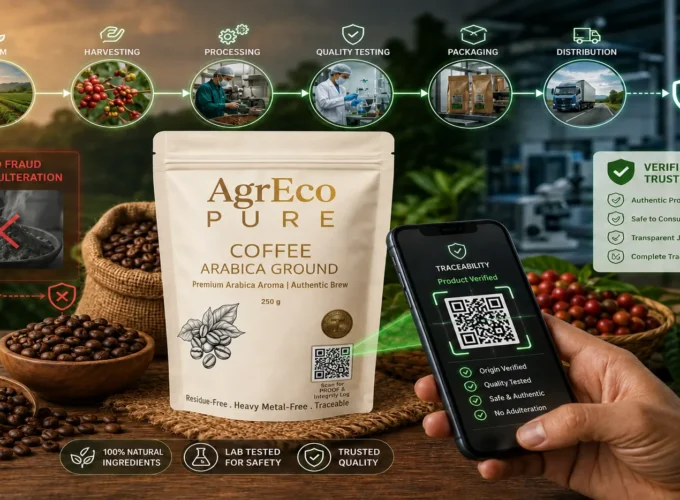
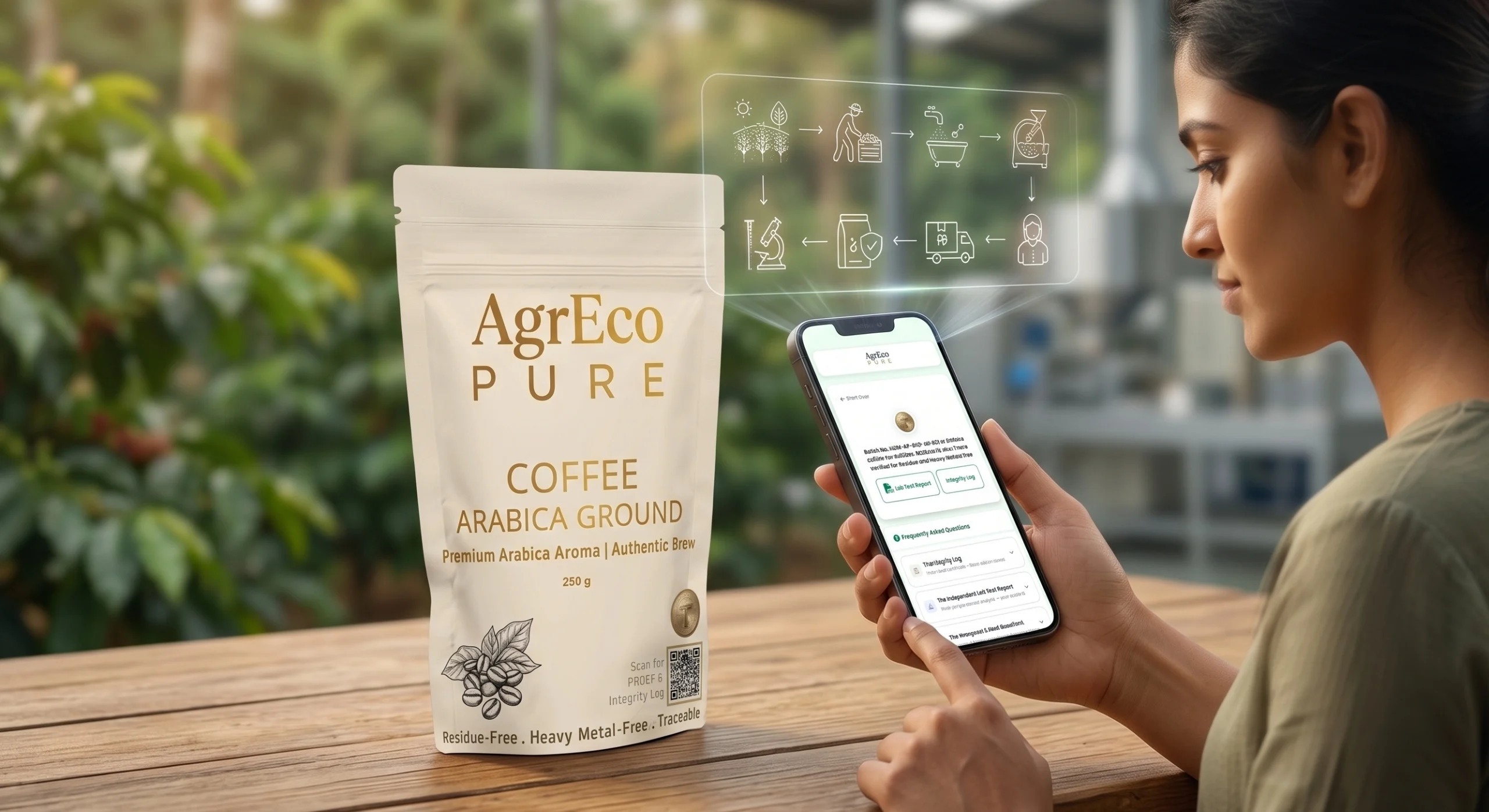
Digital traceability is becoming the new standard for safe food because it allows every stage of the food supply chain to be recorded and verified digitally. This improves food safety, speeds up recalls, supports regulatory compliance, increases transparency, and helps consumers make informed purchasing decisions through accurate and accessible product information.
Food safety has become a top priority for consumers, food producers, and regulators worldwide. People no longer want to know only whether a product is safe—they also want to understand where it came from, how it was produced, and how it reached their table.
Traditional paper-based records often make this information difficult to access. Digital traceability changes that by creating accurate, real-time records throughout the supply chain. At AgrEco PURE, we believe transparency strengthens trust, and digital traceability is helping build a safer and more accountable food system.
What Is Digital Traceability?
Digital traceability is the process of electronically tracking food products throughout the supply chain. It records every stage, from production and processing to transportation and retail, creating a reliable digital history that businesses, regulators, and consumers can access when needed.
Unlike manual documentation, digital systems automatically capture important information using technologies such as QR codes, barcodes, RFID tags, cloud platforms, and mobile applications. These tools reduce human error while making product information easier to retrieve.
Instead of searching through paperwork, businesses can locate product records within seconds, improving both efficiency and accuracy.
Why Is Digital Traceability Becoming the New Standard?
Digital traceability is becoming the preferred approach because it improves food safety, increases supply chain visibility, supports regulatory compliance, reduces operational risks, and gives consumers confidence through verified product information.
Several factors are driving this transition.
- Consumers expect greater transparency.
- Food supply chains are becoming more complex.
- Governments are strengthening traceability requirements.
- Businesses want faster responses to food safety incidents.
- Technology has made digital tracking more affordable and accessible.
As a result, digital traceability is no longer viewed as an optional improvement but as an essential part of modern food safety.
How Does Digital Traceability Improve Food Safety?
Digital traceability improves food safety by making it easier to identify contaminated products, trace their movement, and remove affected batches quickly before they reach more consumers.
When contamination occurs, businesses can quickly determine:
- Where the product originated
- Which batches are affected
- Where those products were distributed
- Which retailers received them
This targeted approach reduces unnecessary recalls, minimizes food waste, and protects public health.
The U.S. Food and Drug Administration has also strengthened traceability requirements under the Food Safety Modernization Act (FSMA). Businesses can better prepare for these requirements by understanding the FSMA food traceability requirements, which emphasize maintaining additional traceability records for certain foods.
How Does Digital Traceability Benefit Consumers?
Digital traceability gives consumers easy access to reliable product information, allowing them to make informed purchasing decisions and verify the authenticity of the food they buy.
By scanning a QR code, consumers may be able to view:
- Product origin
- Production details
- Batch information
- Certifications
- Storage recommendations
- Quality assurance information
Instead of relying only on packaging claims, shoppers can verify information themselves, creating greater confidence in food quality and safety.
Traditional Traceability vs Digital Traceability
| Traditional Traceability | Digital Traceability |
| Paper-based records | Cloud-based digital records |
| Manual data entry | Automated data capture |
| Slower recalls | Faster product identification |
| Limited visibility | End-to-end transparency |
| Higher risk of errors | More accurate information |
What Technologies Power Digital Traceability?
Digital traceability relies on modern technologies that automatically collect, store, and share food supply chain information. These tools improve accuracy, reduce manual work, and provide real-time visibility from production to consumption.
Some of the most widely used technologies include:
| Technology | Purpose |
| QR Codes | Provide consumers with instant product information |
| Barcodes | Track products throughout distribution |
| RFID Tags | Enable automatic product identification |
| Cloud Platforms | Store and manage traceability records |
| IoT Sensors | Monitor temperature and storage conditions |
| Mobile Apps | Record and verify supply chain activities |
Together, these technologies create a connected food ecosystem where accurate information is available whenever it is needed.
How Does Digital Traceability Support Food Businesses?
Digital traceability helps food businesses improve efficiency, strengthen compliance, reduce risks, and build long-term consumer trust through reliable digital records.
Businesses benefit by:
- Responding to recalls more quickly.
- Reducing paperwork and manual errors.
- Improving inventory management.
- Simplifying audits and inspections.
- Strengthening supplier accountability.
- Demonstrating transparency to customers.
These improvements not only support food safety but also make day-to-day operations more efficient.
How Are Food Safety Regulations Encouraging Digital Traceability?
Food safety authorities are increasingly promoting digital traceability to improve outbreak response, strengthen supply chain transparency, and protect public health.
The U.S. Food and Drug Administration’s New Era of Smarter Food Safety Blueprint highlights the importance of technology-enabled traceability and encourages the adoption of digital systems to improve food safety across the supply chain. Businesses that embrace these technologies are better prepared for future regulatory expectations while improving operational resilience.
Benefits of Digital Traceability
| Benefit | Why It Matters |
| Faster recalls | Removes affected products quickly |
| Better transparency | Provides verified product information |
| Higher accuracy | Reduces manual documentation errors |
| Improved compliance | Supports evolving food safety regulations |
| Greater consumer trust | Builds confidence through transparency |
| Better operational efficiency | Saves time and improves record management |
Key Takeaways
- Digital traceability creates a complete digital record from farm to consumer.
- It enables faster food recalls and improves food safety.
- Businesses can meet evolving food safety regulations more efficiently.
- Consumers gain greater confidence through transparent product information.
- Technologies such as QR codes and cloud-based systems make food tracking easier and more reliable.
Frequently Asked Questions
Why is digital traceability important?
It improves food safety, supports faster recalls, reduces errors, increases transparency, and helps businesses comply with food safety regulations.
How do QR codes improve food safety?
QR codes allow consumers and businesses to instantly access verified information about a product’s origin, production, certifications, and traceability records.
Can digital traceability reduce food fraud?
Yes. Digital records make it easier to verify product authenticity and identify inconsistencies throughout the supply chain.
Is digital traceability becoming mandatory?
Many countries are strengthening food traceability requirements. Digital systems help businesses meet these evolving regulatory expectations more effectively.
What industries benefit from digital traceability?
Agriculture, food processing, packaging, logistics, retail, and food service businesses all benefit from improved visibility and recordkeeping.
How does digital traceability build consumer trust?
Consumers can verify product information instead of relying solely on package claims, increasing confidence in food quality and safety.
What is the future of digital traceability?
As food supply chains become more connected, digital traceability is expected to become a standard practice, supported by technologies such as QR codes, IoT, cloud platforms, and AI-powered analytics.
Final Answer
Digital traceability is becoming the new standard for safe food because it provides accurate, real-time visibility throughout the food supply chain. It enables faster recalls, improves food safety, supports regulatory compliance, and gives consumers access to reliable product information. As technology continues to advance, digital traceability will play an increasingly important role in creating a safer, more transparent, and more trustworthy food system.
At AgrEco PURE, we believe transparency is essential to food safety. By supporting digital traceability and sharing reliable product information, we are committed to helping consumers make informed choices while promoting greater trust across the food supply chain.